
Venues · September 29, 2026
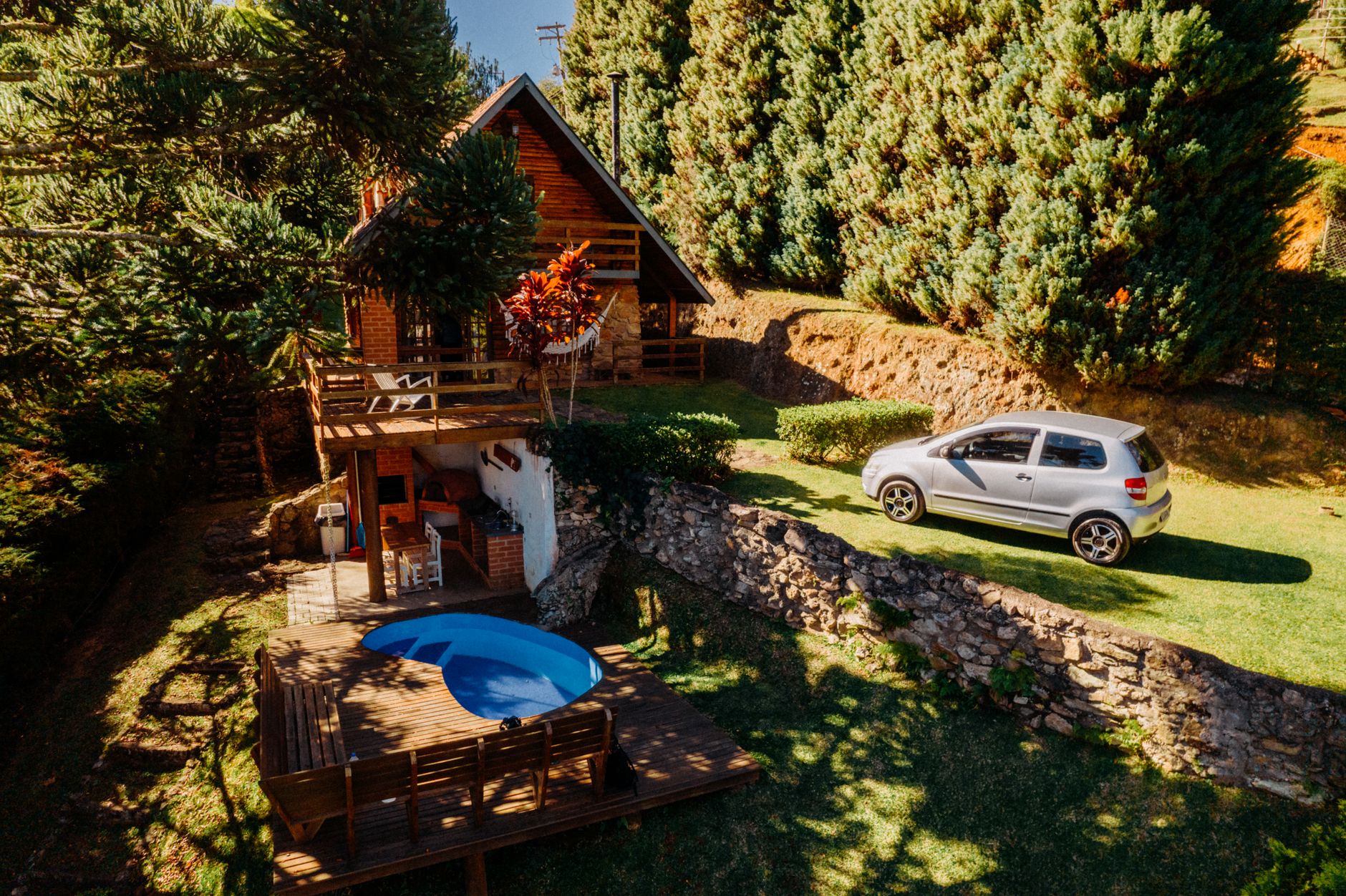
A lot of the weddings we work in Summit County don't happen at a venue at all. They happen at a rented house — six bedrooms above Silverthorne, a ski-in place in Keystone, something with a deck in Frisco that looked incredible in the listing photos. It's a wonderful way to get married. It's also a completely different planning problem, because a wedding bar setup at a vacation rental in Summit County has to work around a house that was designed for a family of eight on a ski trip, not for 100 guests holding drinks at 9,300 feet.
Nobody hands you a floor plan for this. So here's what we look at when we walk a rental, and the questions worth asking the owner before anything gets booked.
Where the Bar Actually Goes — and Why the Kitchen Island Is Usually the Worst Choice
Almost every couple's first instinct is the kitchen island. It's the obvious surface, it's near the fridge, and it's where people naturally gather. That last part is exactly the problem.
The kitchen in a mountain rental is a single lane. Your caterer needs it, the sink is in it, and the trash is under it. Put the bar there and you've created a standing crowd of 15 people directly between the oven and the door your caterer is carrying trays through. The drink line also stops being a line — it becomes a room, and nobody can get to the appetizers.
Three spots usually work better:
- The deck. Best for traffic flow, and it pulls the crowd toward the view, which is why you rented the place. The catch is wind — an exposed deck in Summit County can move a stack of napkins, a garnish tray and an empty glassware rack in one gust, and afternoon wind is normal here, not unusual. Tuck the bar against the house wall rather than out at the rail, and plan for the sun: a west-facing deck at 9,000 feet is punishing at 5 p.m., and guests will stand wherever the shade is regardless of where you put the bar.
- An open garage bay. Underrated. It's covered, it's usually got the best power in the house, the floor can take spills and melting ice, and it's off the main path. Roll the owner's gear to one side, drape it, and you have a real bar with weather protection.
- A covered entry or breezeway. Works well when it's wide enough that guests can queue along one wall. Check that it isn't the only route between the ceremony space and the bathrooms — a bar in a doorway backs up everything behind it.
Wherever it lands, aim for a spot that's 30 to 50 feet from where people will actually stand. Close enough that it feels easy, far enough that the line doesn't spill into the dance floor or the caterer's lane.
Cold Storage Math When the Fridge Is Already Full
By the afternoon of the wedding, that beautiful rental refrigerator holds catering trays, breakfast for the wedding party, and someone's leftovers from Tuesday. Assume the bar gets none of it.
Plan the bar's cold storage as a separate system. For a 100-guest reception, that's generally three to four large coolers minimum: one or two for beer and seltzer, one for white wine and anything sparkling, and at least one dedicated to ice you're not going to open until you need it. Ice disappears faster up here than people expect — dry air, strong sun, and a deck that's been baking all afternoon. We bring ice as part of our setup, but the space to hold it is the house's job, and it needs to be planned.
Where the coolers sit matters more than it sounds. Wet coolers slide on a finished deck, especially one with any pitch for snowmelt. Set them on a rubber mat or a flattened box, keep them out of direct sun, and keep them behind the bar, not beside it — a guest who can reach a cooler will open it, and then it's open for twenty minutes.
Power and Light After the Sun Goes Behind the Ridge
Here's the most common failure at a rental wedding: the house has exactly one exterior outlet, and it's already running the string lights, the DJ's powered speaker, and a space heater someone plugged in when it got cold. That's a tripped breaker in a dark garage at 9:15 p.m.
A bar doesn't need much on its own — task lighting so bartenders can see what they're pouring, and a blender if you're doing anything frozen, which alone can pull as much as a small space heater. But it needs to be on a circuit that isn't fighting with the band. Find out which outlets share a breaker before the day, and find the panel. Write down where it is and tell the caterer and the DJ.
Then plan for dark. In wedding season, the sun drops behind the ridgeline well before the party ends, and the bar goes from "obvious" to "invisible" in about ten minutes. Battery lanterns on the bar top and something marking the path from the reception area to the bar keeps service moving and keeps guests off an unlit step.
Water and Waste With No Plumbing at the Bar
A bar with no sink still needs water. Rinse water for shakers and tools, plus a bucket for dump. For a 100-guest night, a few five-gallon jugs covers it — and there needs to be a plan for where that water goes at the end, which is not "over the deck rail into the owner's landscaping."
Melting ice is the other half. Coolers drain, and drained ice water finds the low corner of a deck and sits there. Point the drains off the deck edge or into a bucket someone empties.
Then there's volume, which always surprises people. A hundred guests over a four- or five-hour reception generate a genuinely large pile of empty cans, bottles and glassware — enough that a single kitchen trash can is full long before the toasts. Stage two lined bins behind the bar, plus a separate spot for recycling, and confirm what the rental's trash situation actually is. Many Summit County properties have bear-resistant enclosures with limited capacity and specific rules, and a wedding's worth of glass does not fit in a week's residential service. Have a plan for hauling it out.
The Driveway Decides Your Load-In
Mountain driveways are steep, often gravel, and frequently end in one turnaround that's just big enough for a single vehicle to reverse. That turnaround is going to be wanted by the caterer, the rentals company dropping tables, the photographer, and the shuttle picking up guests — sometimes all within the same half hour.
Build a simple schedule: who arrives when, who parks where, and which 20 feet stays clear for the shuttle. Count the actual parking spots, not the ones in the listing photo. If guests are being shuttled from town, confirm the shuttle can physically turn around at the house — some of these roads can't take a full-size bus, and finding that out on the wedding day is a bad afternoon.
What to Confirm With the Rental Owner — In Writing — Before You Book the Bar
Ask all of these, and get the answers in an email or a message thread rather than over the phone. Assume nothing, even at a property that markets itself for events.
- Is an event permitted at all, and what's the maximum guest count? Occupancy limits and event limits are often different numbers, and some HOAs set them regardless of what the owner says.
- Are outside vendors allowed on the property? Caterer, bartenders, rentals, DJ. Some properties require a list in advance.
- What time does amplified music and outdoor noise have to stop? Get the exact hour. It's usually earlier than couples expect.
- How many vehicles can park on site, and where? Include the driveway, any garage bays you can use, and whether street parking is legal.
- Can furniture be moved, and what's off limits? Specifically ask about the deck — weight limits, whether a hot tub area can be closed off, and whether patio furniture can be relocated for the night.
- What's the trash and recycling setup, and is there a haul-out requirement?
- Which exterior outlets exist, and where is the breaker panel?
- What's required at checkout, and by when? Cleanup timing shapes how late the bar can run.
None of this is glamorous, and none of it will show up in a single photo from your day. But it's the difference between a bar that quietly works all night and a bar that becomes the thing everyone remembers for the wrong reason.
We work these houses all over Summit County — Breckenridge, Frisco, Dillon, Silverthorne, Keystone and Copper — and we're happy to look at your rental's layout with you before you've committed to anything. Our bartenders are TIPS/ServSafe alcohol-service certified. The host supplies the alcohol; we provide the bartenders, bar setup, mixers, ice, and glassware.
If you've got a house booked and you're trying to picture where the bar goes, send us the details through the quote form and we'll walk through it with you.
← All posts