
Cocktails · October 28, 2026
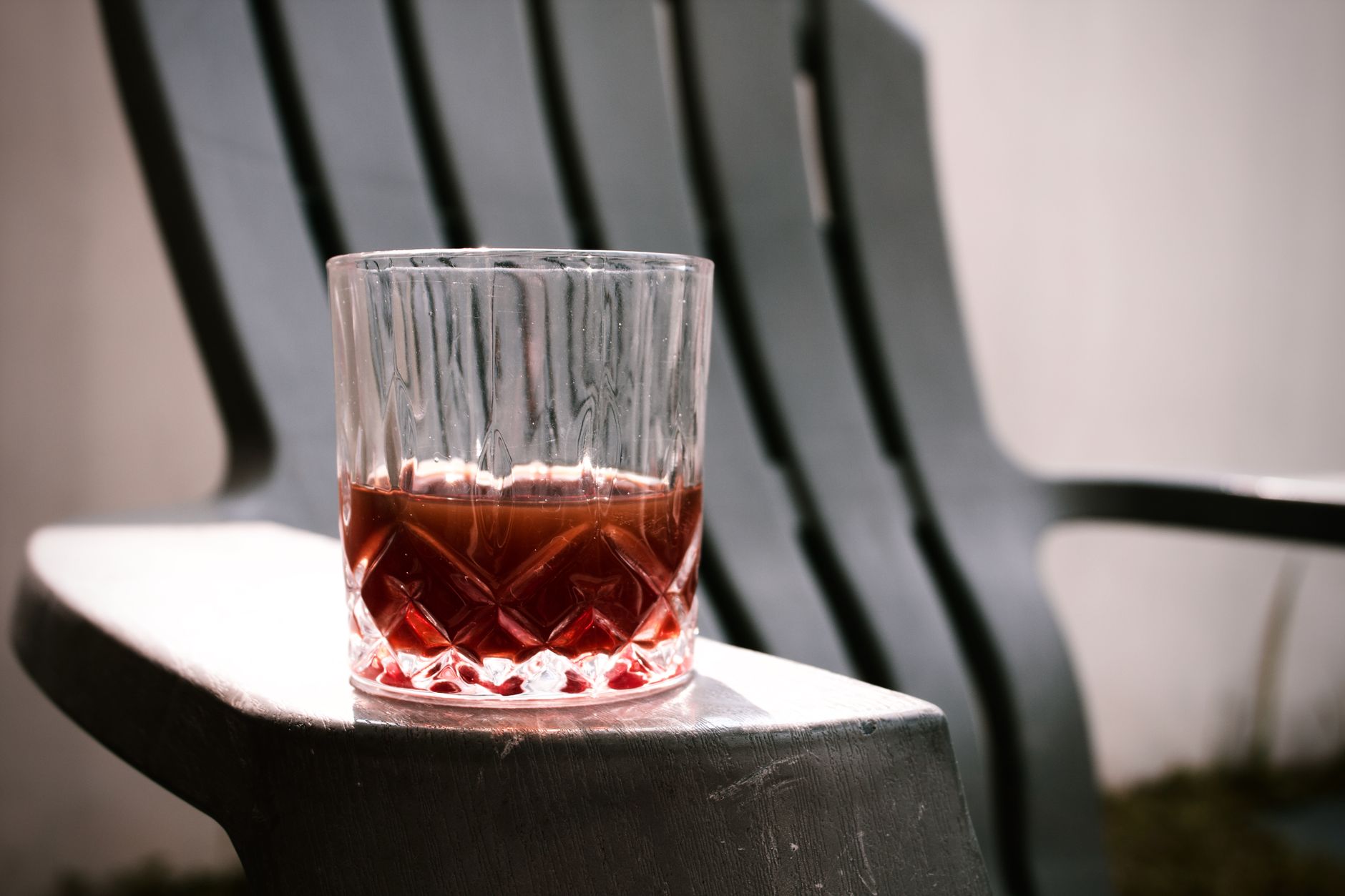
Every September we get some version of the same note. The couple tasted an apple-bourbon old fashioned at a Denver tasting, loved it, wrote it into the menu — and now, at the venue, the same drink is coming back hot, thin, and a little aggressive. Nobody did anything wrong. If you are planning fall signature cocktails for a Colorado mountain wedding, the thing that rarely gets mentioned is that a stirred, spirit-forward drink is the most altitude-sensitive item on a bar menu. Three levers fix it: how much water ends up in the glass, what shape your ice is, and what proof you buy. All three need to be settled before anyone drives to the liquor store, because one of them is a line on your shopping list.
Why a stirred drink lands differently up here
An old fashioned is not bourbon, sugar, and bitters. It is bourbon, sugar, bitters, and water — and the water is a real ingredient, roughly a quarter of what's in the finished glass. You just don't buy it. It arrives off the surface of the ice while the drink is stirred, and anything that changes how fast that ice gives up water changes the recipe.
At 9,000 to 10,000 feet in October, a lot of things change at once. The air is dry. Ice that's been sitting in a cold tub or on a 40-degree bar top is genuinely colder and harder than ice in a Denver tasting room, so it melts more slowly and surrenders less water in the same fifteen seconds of stirring. Pour that and you've made a drink that is technically your recipe and about 15% short on water. It reads as "harsh" or "boozy," and the instinct is to blame the bourbon or the syrup ratio — which is how a perfectly good recipe gets rewritten in the wrong direction.
Then the sun comes out, or the reception moves to a patio at 2 p.m., and the opposite happens: small ice in warm dry air sheds water fast, and by the second hour the same drink is pale and watery. Add in the fact that your guests arrived yesterday, are dehydrated, and are drinking at elevation, and every pour reads stronger than it would at home. None of this is exotic. It just means the drink has to be built on purpose instead of assumed.
Proof is the real lever, and it changes your shopping list
This is the one decision that lands squarely on you, since the host supplies the alcohol. For a guest bar serving spirit-forward cocktails, buy bourbon and rye at 80 to 90 proof (40–45% ABV). Skip the barrel-proof and cask-strength bottles.
Barrel-proof bourbon can run 110 to 130 proof. It is wonderful and it is designed for you to add water to it yourself, slowly, at home. Put it into a two-ounce pour over a cube in dry mountain air and you have roughly a third more alcohol in the glass than the recipe intends, with no way to hide it. A 90-proof bottle will taste rounder in a cocktail than a 115-proof bottle that costs twice as much — on a guest bar, the cheaper bottle is also the better one. If you want one bottled-in-bond rye at 100 proof for the maple drink, that works nicely, but tell us so the recipe is built around that number rather than discovering it on the day.
Ice shape decides the drink
Ice comes with us, along with the bar setup, mixers, garnish, and glassware — but what kind is a decision we'd rather make with you than for you, and it's planned separately from the bulk ice that chills beer, wine, and cider.
Spirit-forward pours want large format: a single 2-inch rock or a 1.25-inch cube. Less surface area per ounce means slower dilution, so drink number one and drink number ninety taste the same. Small, thin machine ice — the kind most venue ice makers produce — is the right thing for a tall vodka soda and the wrong thing for an old fashioned. It is also what quietly waters down 200 drinks somewhere around the second hour, long after anyone is still paying attention to the bar. If your two signatures are both stirred, say so early and we'll plan the drink ice accordingly.
Maple, cinnamon, and apple: getting sweetness right when the air is dry
Dry air flattens aroma, and aroma is most of what you think of as flavor. The practical consequence is that a fall drink needs its spice and sweetness pushed slightly further than it would at sea level — but with a firmer hand, not a heavier one. What works:
- Cinnamon-demerara syrup, 2:1 sugar to water, cinnamon sticks steeped in warm (not boiled) syrup. Demerara brings a molasses weight that plain sugar doesn't.
- Grade A dark maple, used straight or cut 3:1 with water so it pours accurately. Dark grade, not amber — amber disappears behind the whiskey.
- Two to three dashes of bitters, minimum. Bitters are aromatics, and aromatics are exactly what's getting lost. This is the cheapest fix available.
On safety: homemade syrups are perishable, and an outdoor reception is a long day. A 2:1 syrup holds up for a couple of weeks refrigerated; a thinner 1:1 is closer to a week. Make them two or three days out, not two weeks. At the venue they live in a cooler, not on a sunny bar back — and we'd rather swap in a fresh cold bottle every couple of hours than keep topping off one jug that's been out since the ceremony. Our bartenders are TIPS/ServSafe alcohol-service certified, and syrup handling is part of that same habit.
Batching a stirred cocktail honestly
Batching is the single biggest quality upgrade available on a mountain bar, because it removes the stirring variable entirely. The honest version means pre-diluting with measured water:
- Combine your spirits, syrup, and bitters at full scale.
- Add water equal to about 20% of the total liquid volume — a little less if it's going over a big cube that will add a touch more.
- Chill the whole batch in a cooler so it pours cold. A room-temperature batch over ice melts the ice and lands you back where you started.
- Pour and serve. One brief stir, maybe none.
What should never be batched: anything with fresh cider or fresh citrus. Cider is a perishable, low-acid juice that goes dull within hours and needs to stay cold the entire time. Fresh lemon starts losing its edge after about four hours and tastes noticeably tired by hour six. If you want a cider drink — and plenty of couples do — make that the build-to-order one, with cold cider opened in small bottles through the night.
How to plan fall signature cocktails for a Colorado mountain wedding: a two-drink menu you can buy for
Two signatures is the right number. Here's a pairing that batches cleanly:
The apple-forward one. 1.5 oz bourbon, 0.5 oz apple brandy, 0.25 oz cinnamon-demerara syrup, 2 dashes Angostura. Apple brandy gives you orchard character that survives batching, which fresh cider can't.
The maple one. 2 oz rye, 0.75 oz sweet vermouth, 0.25 oz dark maple, 2 dashes orange bitters. Buy vermouth in 375 ml bottles and keep them refrigerated — it's wine, and it oxidizes.
The bottle logic, for 100 guests over a four-hour reception: we plan on roughly one drink per guest per hour, front-loaded in the first hour, and we'd expect the two signatures to cover about a third of that — call it 120 to 140 cocktails, leaning slightly toward whichever drink is lighter. At a 2 oz base pour, a 750 ml bottle yields about 12 cocktails. So: 6 bottles of bourbon, 4 of rye, 2 of apple brandy, 2 × 375 ml sweet vermouth, plus a bottle each of Angostura and orange bitters. Send us your guest count and we'll check that math against your actual timeline before you buy.
Taste-test at elevation, with the real glass
The final tasting happens in Summit County, not in Denver. Bring the exact bottles you intend to buy — proof varies between brands and changes the ratio. Use the real glassware, because a 10 oz rocks glass and a 7 oz coupe give you different dilution and completely different aroma. Taste it cold, taste it again ten minutes later the way a guest actually drinks it, and taste it near the hour your reception starts: fall here can be sunny and in the 60s at four o'clock and below freezing by eight, and a drink built for the patio is a different drink after dark. Ten minutes of this settles every argument.
If you're sketching out a fall menu now, send us the date, the venue, and your guest count through the quote form. We'll come back with the batching plan, the ice we'd bring, and a shopping list with proof written next to every bottle — so the liquor run is one trip, and the drink you tasted is the drink your guests get.
← All posts